Who’s Protecting the People Who Protect the Game?
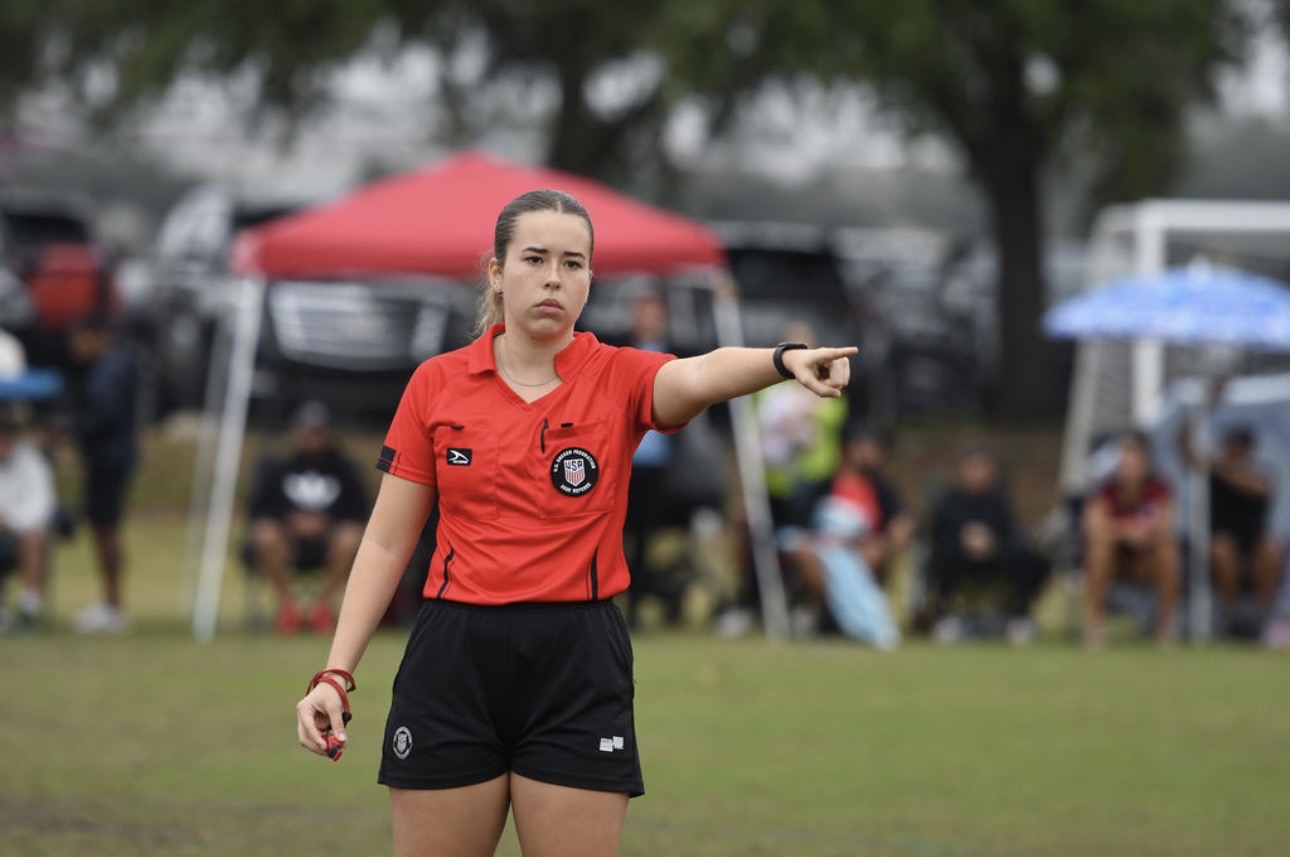
I still remember the day I earned my referee license. The paper felt heavier in my hands than any report card. I’d studied the Laws of the Game like they were poetry. I saved up and bought my first all black officials uniform, and my refs badge was sewn on with pride and purpose. I love the game. Soccer is in my blood, and I wanted to give back to it. I was proud of myself. I had a role. I had responsibility. I felt like I mattered.
Standing on the sideline before kickoff, my stomach was full of nerves. The field looked bigger from the middle than it ever did from the stands. But I took a breath and reminded myself why I was there. To be fair, to do my best, to protect the game I love. When the game finally started, something settled inside me. I found my rhythm. I made clear calls. I felt strong. Confident. Like I belonged.
And then I made a mistake.
Maybe it was a foul I didn’t see clearly. Maybe it was an offside call that could’ve gone either way. Before I could even process it, the noise came crashing in. Not just from the stands, but from the field and the technical area as well.
“Ref! Open your eyes!”
“Are you being paid by the other team?”
“Ref, you suck!”
The words landed like stones. My chest tightened. My face stayed still, but inside I felt small. I wasn’t trying to be bad. I wasn’t trying to hurt anyone’s team. I was trying to do the right thing in a game that moves fast and leaves no room to rewind.
I wanted to disappear. I fought hard to keep my face calm, but inside, disbelief turned to hurt. All I wanted was to do a good job. Isn’t that what we all want?
Here’s a truth most people don’t see. Across the United States, youth soccer is facing a quiet but growing crisis. Thousands of games each weekend struggle to find officials. We’re living through a genuine referee shortage in youth sports. Since 2018–19, roughly 50,000 officials nationwide have stopped officiating, leaving leagues scrambling to cover games, and that’s just high school figures.
Even worse: on average, only 2 out of every 10 officials return for their third year, meaning most new referees drop out quickly. Many cite the same reason for leaving: abuse. From spectators, from coaches, and even from players. The game is growing but the people needed to keep it fair are disappearing.
So think about this for a moment:
The referee calling your child’s game…
Is also someone’s child.
Someone’s brother or sister.
Someone’s mother or father.
Someone with dreams and dignity.
Imagine it was your child, your sibling, your parent in that uniform, standing alone in the middle of the field while insults cut them down.
How would you feel seeing them being disrespected?
Would you explain it away as “part of the game”?
Would you expect better from the players, coaches and spectators?
At Sol, as part of our player development philosophy, our coaches work hard to teach kids teamwork, respect, and discipline. But those lessons don’t come only from training sessions or team talks. They come from what players see modeled around them. When officials are treated like targets, those moments quietly shape what young players believe is acceptable. It’s worth asking ourselves what lessons we hope they carry with them long after the final whistle.
Ultimately, we could be losing not just referees, but the future of the game itself. Without officials willing to step onto the pitch, the ball simply won’t roll.
For the sake of the game…
For the sake of our youth…
Let’s support the referees who are trying to make the sport we love fair.
Referees are a part of our soccer family.
And without them? There is no game.